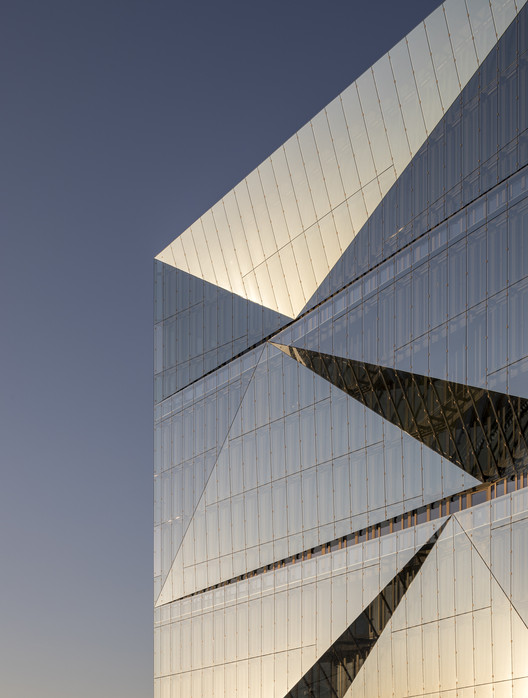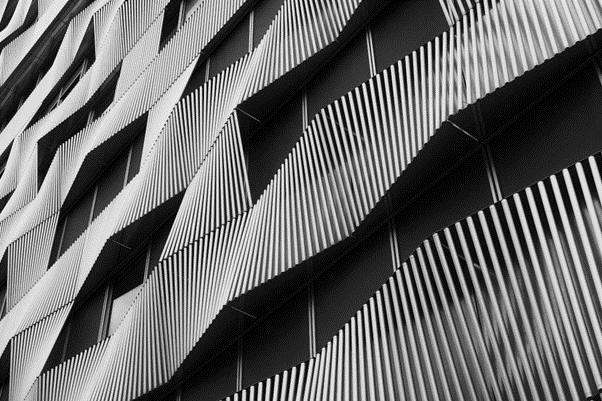
As architects, we are constantly balancing design aesthetics with the urgent need for environmental responsibility. Buildings account for nearly 40% of global energy-related carbon emissions, making the building envelope one of our most critical tools for driving real change. While ventilated facades (also known as rainscreen cladding systems) are often celebrated for their crisp, modern aesthetics, their true value lies beneath the surface in their superior thermodynamic performance and long-term sustainability benefits.
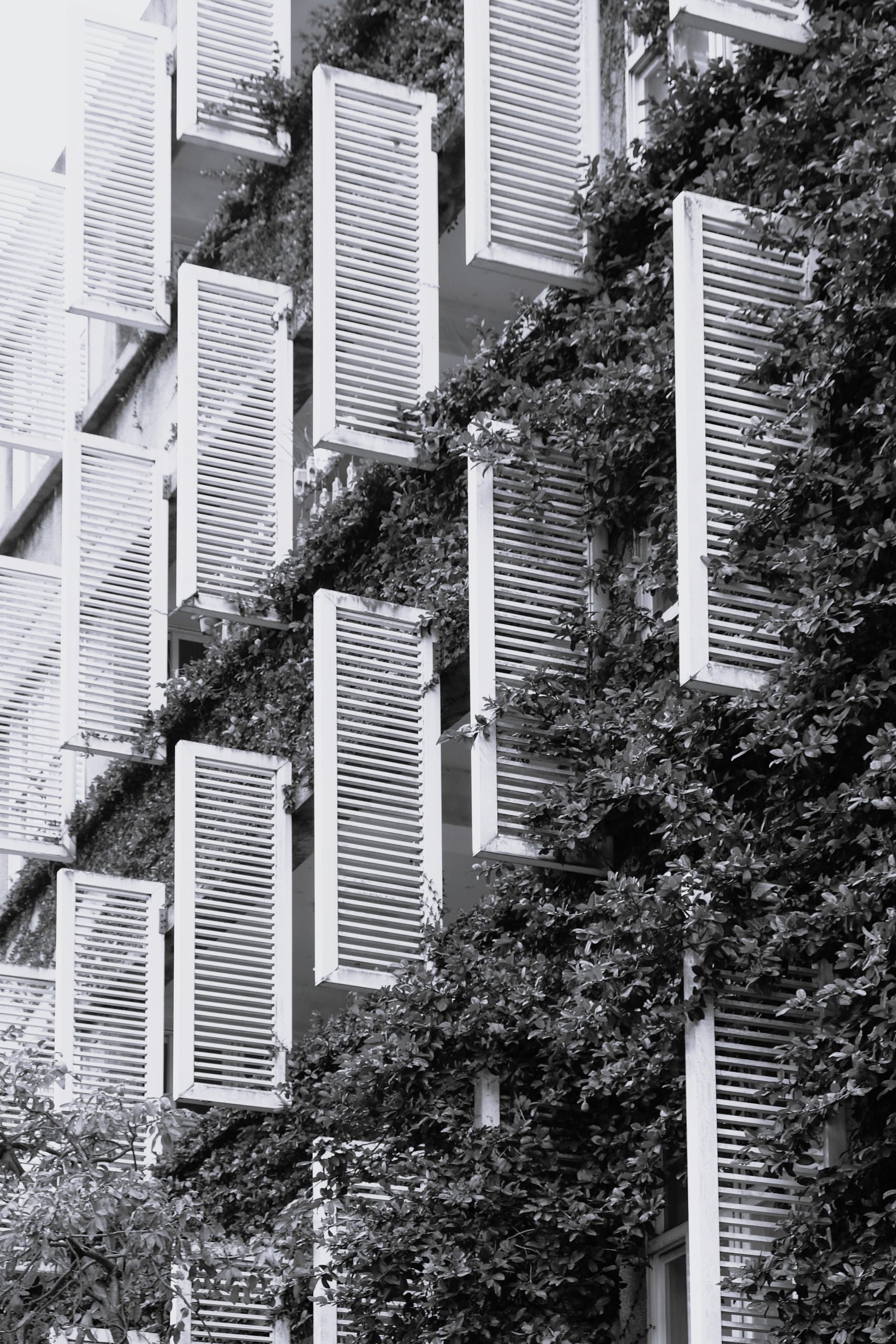
A ventilated facade is an exterior wall system based on a double-skin construction principle. It consists of an inner structural wall, a layer of continuous exterior insulation, an aluminum or steel support frame, and an outer cladding panel. Crucially, a continuous air cavity is left between the insulation and the outer cladding panels. This air cavity is open at both the bottom and top of the wall, allowing air to circulate naturally through the system.
The fundamental engine behind the efficiency of a ventilated facade is the chimney effect, or stack effect. During warm summer months, solar radiation heats the air trapped inside the ventilation cavity. As this air warms up, its density decreases, causing it to naturally rise and escape through the top openings of the facade. This movement draws cooler air in through the bottom vents, creating a continuous upward draft. This natural airflow acts as a dynamic thermal shield, dissipating up to 70% of solar heat gain before it can ever penetrate the main building structure. As a result, the internal cooling load is drastically reduced, lowering air conditioning energy reliance and reducing peak power demand.
During winter, the mechanism switches from a cooling draft to a thermal buffer. Although the air inside the cavity moves more slowly, the multi-layer system combined with continuous exterior insulation minimizes thermal bridging. In traditional masonry construction, structural components like concrete floor slabs, columns, and metal connectors act as thermal highways, letting heat leak out of the interior. By wrapping the entire exterior shell of the building in an unbroken, continuous layer of insulation, a rainscreen system keeps indoor temperatures stable with significantly lower energy consumption for heating.
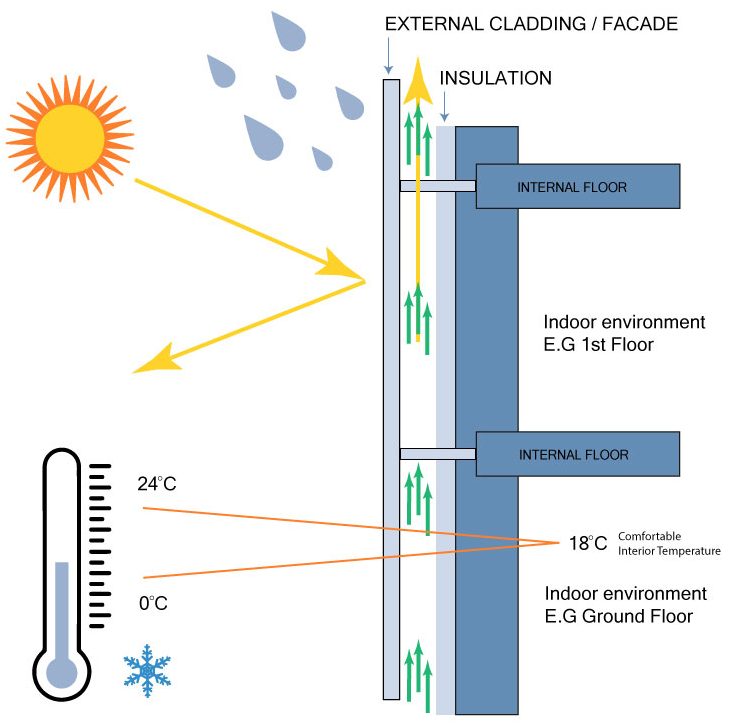
Beyond pure thermal regulation, ventilated facades excel at moisture control—one of the most critical factors in extending a building’s lifespan. Water is the primary cause of building envelope degradation, mold growth, and loss of insulation performance. Ventilated facades operate as a two-stage defense system. The outer cladding acts as a primary barrier against wind-driven rain and snow. Any moisture that manages to penetrate the panel joints, along with any condensation forming on the inner surface of the cladding, is swept away and rapidly evaporated by the constant airflow inside the cavity. Keeping the structural wall and insulation permanently dry prevents rot, maintains maximum thermal resistance, and protects structural integrity over decades.
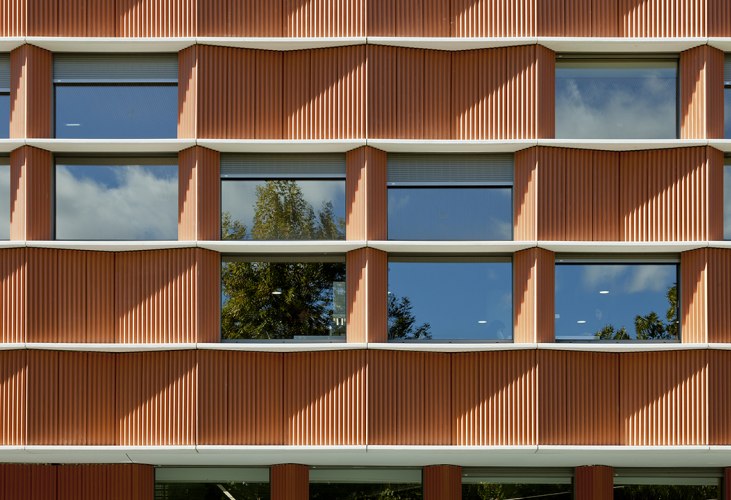
From a material standpoint, ventilated facade systems align exceptionally well with circular economy principles and modern green building certifications like LEED, BREEAM, and DGNB. Because the panels and subframes are installed using mechanical dry-fix methods rather than wet mortars or chemical adhesives, the entire system supports Design for Disassembly (DfD). At the end of a building’s life cycle, components can be unscrewed, separated, and either reused or recycled without destroying the underlying structure. Architects can choose from a wide range of durable, eco-friendly cladding materials—including natural terracotta, fiber cement, high-pressure laminates from renewable wood fibers, and infinitely recyclable metals like aluminum and zinc.
Ultimately, specifying a ventilated facade is an investment in both operational efficiency and environmental durability. By reducing building energy demand, managing moisture naturally, and facilitating material recovery at end-of-life, ventilated facades offer a complete architectural solution that merges striking design with high-performance sustainability.